
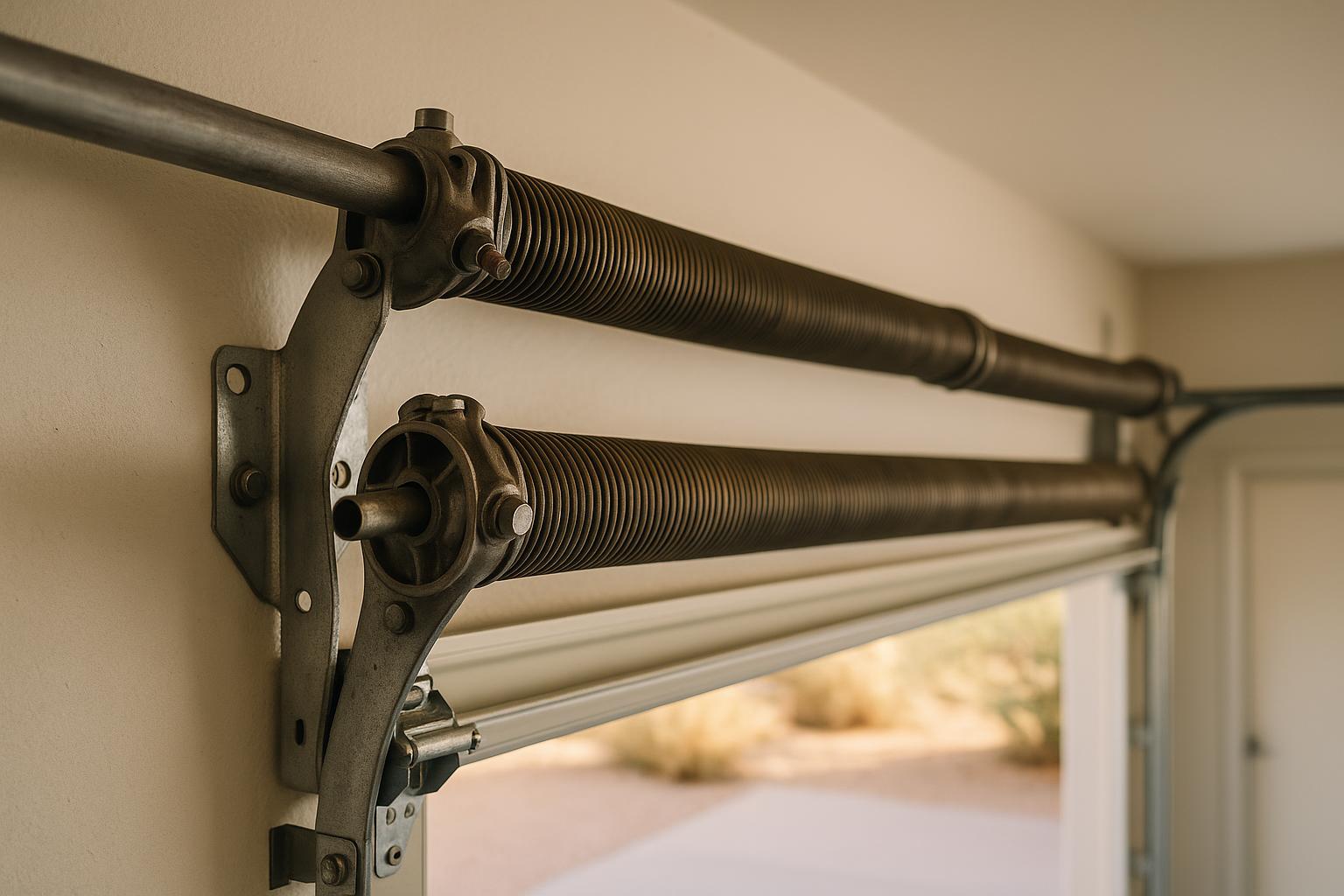
Your Garage Door Springs Are Working Harder Than You Think
Every time you open or close your garage door, the springs are doing the heavy lifting — literally. A standard two-car garage door can weigh between 150 and 250 pounds, and the springs are responsible for counterbalancing all of that weight. Your garage door opener doesn't actually lift the door; the springs do. The opener just provides the motorized push to get things moving.
For homeowners in Waddell, where garage doors get used multiple times a day and endure extreme desert heat, understanding the lifespan of your springs is essential. A sudden spring failure doesn't just leave you stuck — it can be dangerous. Here's what you need to know about when and why to replace your garage door springs before they give out on you.
How Long Do Garage Door Springs Last?
Garage door springs are rated by cycles. One cycle equals one full open-and-close of the door. Most standard torsion springs are rated for approximately 10,000 cycles, which translates to roughly 7 to 10 years of typical residential use.
However, several factors can shorten that lifespan:
- Frequency of use: If your garage door is your primary entry point (which is common in Waddell neighborhoods), you might be running 4 to 6 cycles per day instead of the average 2 to 3. That cuts the spring's life significantly.
- Extreme heat: Arizona summers push temperatures well above 110°F, and the inside of a garage can get even hotter. Metal expands and contracts with temperature swings, which accelerates wear and fatigue on springs over time.
- Lack of maintenance: Springs that aren't lubricated regularly develop more friction and rust, both of which weaken the coils faster.
- Improper installation: If springs weren't sized correctly for your door's weight, they'll wear out much sooner than expected.
High-cycle springs rated for 25,000 or even 50,000 cycles are available and can last 15 to 20 years or more. If you're replacing springs, it's worth asking about these upgraded options.
Signs Your Garage Door Springs Are Wearing Out
Springs rarely fail without warning. If you pay attention, you'll notice several signs that your springs are nearing the end of their life:
The Door Feels Heavier Than Usual
Try disconnecting your opener by pulling the emergency release cord, then manually lift the door halfway. A properly balanced door should stay in place on its own. If it feels heavy, slides back down, or is difficult to lift, your springs are losing tension.
The Door Opens Unevenly
If one side of the door rises faster than the other, or the door looks crooked during operation, one spring may be weaker than the other. On two-spring systems, both springs should be replaced at the same time — even if only one has failed — because the second one is likely close behind.
Visible Wear on the Springs
Take a look at your torsion springs, which are mounted on the bar above the door. Look for gaps between the coils, rust, or stretched-out sections. Any of these are signs the spring is deteriorating.
Loud Banging Noise
If you heard a loud bang from your garage — almost like a gunshot — and your door suddenly won't open, a spring has already snapped. This is the scenario every homeowner wants to avoid, because a broken spring under tension can cause serious injury or damage.
The Opener Struggles or Stops
When springs weaken, your opener has to work harder to lift the door. You might notice the motor straining, the door opening more slowly, or the opener stopping partway through the cycle. Continuing to run the opener with bad springs can burn out the motor, turning a spring replacement into a much more expensive repair.
Why You Shouldn't Wait for Springs to Break
Many homeowners take a "if it ain't broke, don't fix it" approach. With garage door springs, that mindset can backfire. Here's why proactive replacement is the smarter move:
- Safety: A snapping torsion spring releases a tremendous amount of stored energy. If anyone is standing near the door when it happens, the consequences can be severe.
- Convenience: A broken spring almost always means your car is trapped in the garage. In Waddell, where most daily errands require driving, being stuck without your vehicle is a real problem.
- Cost: A planned spring replacement is straightforward and affordable. An emergency call after a spring breaks — especially if it damages the door, tracks, or opener — costs significantly more.
- Property damage: When a spring snaps, the door can slam shut with full force. This can damage the door panels, bend the tracks, or even damage a vehicle parked underneath.
Can You Replace Garage Door Springs Yourself?
This is one of those jobs where the answer is a firm no for most homeowners. Garage door springs — especially torsion springs — are under extreme tension. Improper handling can result in serious injury or death. Professional technicians have the tools, training, and experience to safely remove old springs and install new ones with the correct tension for your specific door.
Even extension springs, which are mounted along the horizontal tracks, should be handled by a professional. The risks simply aren't worth the savings.
What to Expect During a Spring Replacement
When you call a professional for spring replacement, the process is typically quick and straightforward:
- Inspection: The technician will assess your current springs, measure the door, and verify the correct spring size and type.
- Safe removal: The old springs are carefully unwound and removed.
- Installation: New springs are installed and wound to the proper tension for your door's weight.
- Balancing: The door is tested and balanced to ensure smooth, even operation.
- Lubrication and adjustment: All moving parts are lubricated, and the opener settings are adjusted if needed.
The entire job usually takes about an hour, and you're back to normal operation the same day.
Keep Your Springs Healthy Longer
Regular maintenance can extend the life of your garage door springs and help you avoid unexpected failures. Here are a few simple steps Waddell homeowners can take:
- Lubricate springs every 3 to 4 months with a silicone-based garage door lubricant. Avoid WD-40, which is a solvent, not a lubricant.
- Schedule an annual tune-up to have a professional inspect the springs, cables, rollers, and overall balance of the door.
- Listen and watch for changes in how your door sounds and moves. Squeaking, grinding, or jerky movement are early warning signs.
Don't Wait for the Bang
If your garage door springs are more than 7 years old, or if you've noticed any of the warning signs above, it's time to have them inspected. At Waddell Garage & Gate, we help homeowners across Waddell, Surprise, Litchfield Park, and the surrounding West Valley communities stay ahead of spring failures with honest assessments and reliable repairs. Give us a call to schedule an inspection — before your springs make the decision for you.