
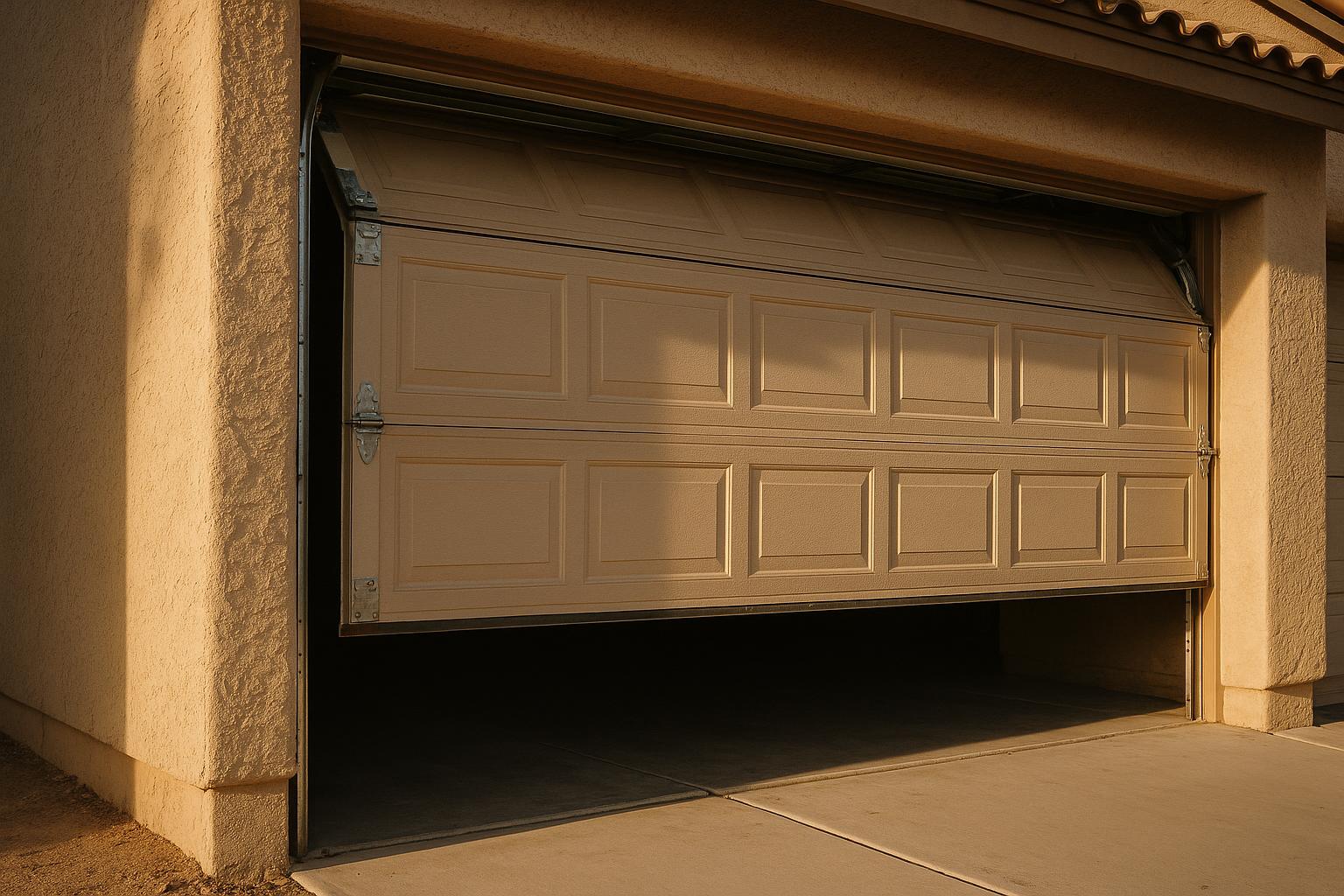
That Grinding, Squealing, or Banging Sound Isn't Normal
You press the button on your garage door opener, and instead of a smooth, quiet operation, you're greeted with a symphony of grinding, squealing, rattling, or banging. If your garage door has started making loud or unusual noises, you're not alone. It's one of the most common complaints we hear from homeowners across Waddell and the surrounding West Valley communities.
The good news is that most garage door noises have identifiable — and fixable — causes. The bad news is that ignoring them can lead to more expensive repairs down the road. Let's walk through the most common reasons your garage door is making noise and what you can do about each one.
1. Worn or Dry Rollers
Garage door rollers are the small wheels that guide your door along the vertical and horizontal tracks. Over time, these rollers wear down, and the bearings inside them can dry out or deteriorate. When that happens, you'll typically hear a grinding or squealing sound every time the door moves.
There are two main types of rollers:
- Steel rollers: These are the most common and the loudest. They're durable but tend to get noisy as they age, especially if they lack sealed bearings.
- Nylon rollers: These run significantly quieter and don't require as much lubrication. Upgrading from steel to nylon rollers is one of the most popular noise-reduction improvements we do for Waddell homeowners.
If your rollers are visibly worn, cracked, or wobbling in the track, it's time for a replacement. This is a relatively affordable fix that makes a dramatic difference in how your garage door sounds.
2. Lack of Lubrication
Arizona's dry desert climate can be tough on garage door components. Without regular lubrication, metal parts grind against each other, creating squealing, scraping, and popping noises. The parts that need periodic lubrication include:
- Hinges
- Rollers (if they have bearings)
- Springs
- The bearing plates at the top of the door
- The opener's rail or chain
Use a garage door-specific lubricant or a white lithium grease — never WD-40, which is a solvent and not a long-term lubricant. A quick lubrication session every six months can prevent a lot of noise and extend the life of your door's moving parts.
3. Loose Hardware
Your garage door opens and closes hundreds of times a year. All that movement creates vibration, and vibration loosens nuts, bolts, and brackets over time. Loose hardware is one of the most common causes of rattling and vibrating noises during operation.
Take a socket wrench and carefully tighten all the bolts on the door's hinges, brackets, and track mounts. Be careful not to overtighten — you just want them snug. If you notice any bolts that are stripped or brackets that are bent, those should be replaced.
4. Misaligned or Damaged Tracks
The metal tracks on either side of your garage door need to be properly aligned for the door to travel smoothly. If a track gets bumped, bent, or shifts out of alignment, the door can scrape, grind, or bind as it moves. You might also notice the door hesitating or jerking at certain points.
Visually inspect the tracks for any obvious bends, gaps between the rollers and the track, or debris buildup. Minor alignment issues can sometimes be corrected by loosening the track brackets and gently tapping the track back into position. However, significant misalignment or damaged tracks should be handled by a professional to avoid making the problem worse or creating a safety hazard.
5. A Noisy Garage Door Opener
Sometimes the noise isn't coming from the door itself — it's coming from the opener. Chain-drive openers are the most common type, and they're also the loudest. The metal chain running along the rail can produce a rattling, clanking noise that echoes through the garage and into your home.
If your opener is the source of the noise, you have a few options:
- Tighten and lubricate the chain: A loose chain slaps against the rail, creating extra noise. Adjusting the tension and applying lubricant can help.
- Install vibration isolators: These rubber pads go between the opener and the ceiling mount, reducing the vibration that transfers into your home's structure.
- Upgrade to a belt-drive opener: Belt-drive openers use a reinforced rubber belt instead of a metal chain, making them dramatically quieter. This is a popular upgrade for homes in Waddell where the garage is attached to the main living space.
6. Worn or Unbalanced Springs
Torsion springs and extension springs bear the full weight of your garage door. As they age, they can start to make popping, creaking, or loud snapping sounds. A popping noise when the door starts moving often means the springs are binding or need lubrication. A loud bang could indicate a spring has broken entirely.
Springs are under extreme tension and are the most dangerous component of a garage door system. Never attempt to adjust, remove, or replace garage door springs yourself. This is always a job for a trained technician.
7. Worn Weatherstripping or Bottom Seal
This one is easy to overlook. The rubber weatherstripping along the bottom of your garage door can harden, crack, or come loose over time — especially in the intense Waddell summer heat. When this happens, the door may scrape against the concrete floor or create a flapping noise as it moves. Replacing the bottom seal is inexpensive and also helps keep dust, pests, and heat out of your garage.
When to Call a Professional
Some noise issues are simple DIY fixes — a little lubrication here, a tightened bolt there. But other problems, like damaged tracks, failing springs, or a worn-out opener, require professional attention. Continuing to operate a garage door with a serious underlying issue can lead to a complete breakdown or even a safety hazard for your family.
If you've tried the basic fixes and the noise persists, or if you hear a sudden loud bang or notice the door isn't moving smoothly, it's time to call in a pro.
Keep Your Garage Door Running Quietly
The best way to prevent a noisy garage door is with regular maintenance. A professional tune-up once a year — or twice a year here in the desert where heat and dust take a toll — can catch small issues before they turn into loud, expensive problems. During a maintenance visit, a technician will lubricate all moving parts, tighten hardware, inspect springs and cables, test the balance of the door, and check the opener for wear.
At Waddell Garage & Gate, we help homeowners throughout Waddell, Surprise, Litchfield Park, Goodyear, Buckeye, and Peoria keep their garage doors running smoothly and quietly. Whether you need a quick tune-up, a roller replacement, or a full opener upgrade, we show up on time and get the job done right. Give us a call if your garage door is trying to tell you something — we'll help you figure out what it's saying.