
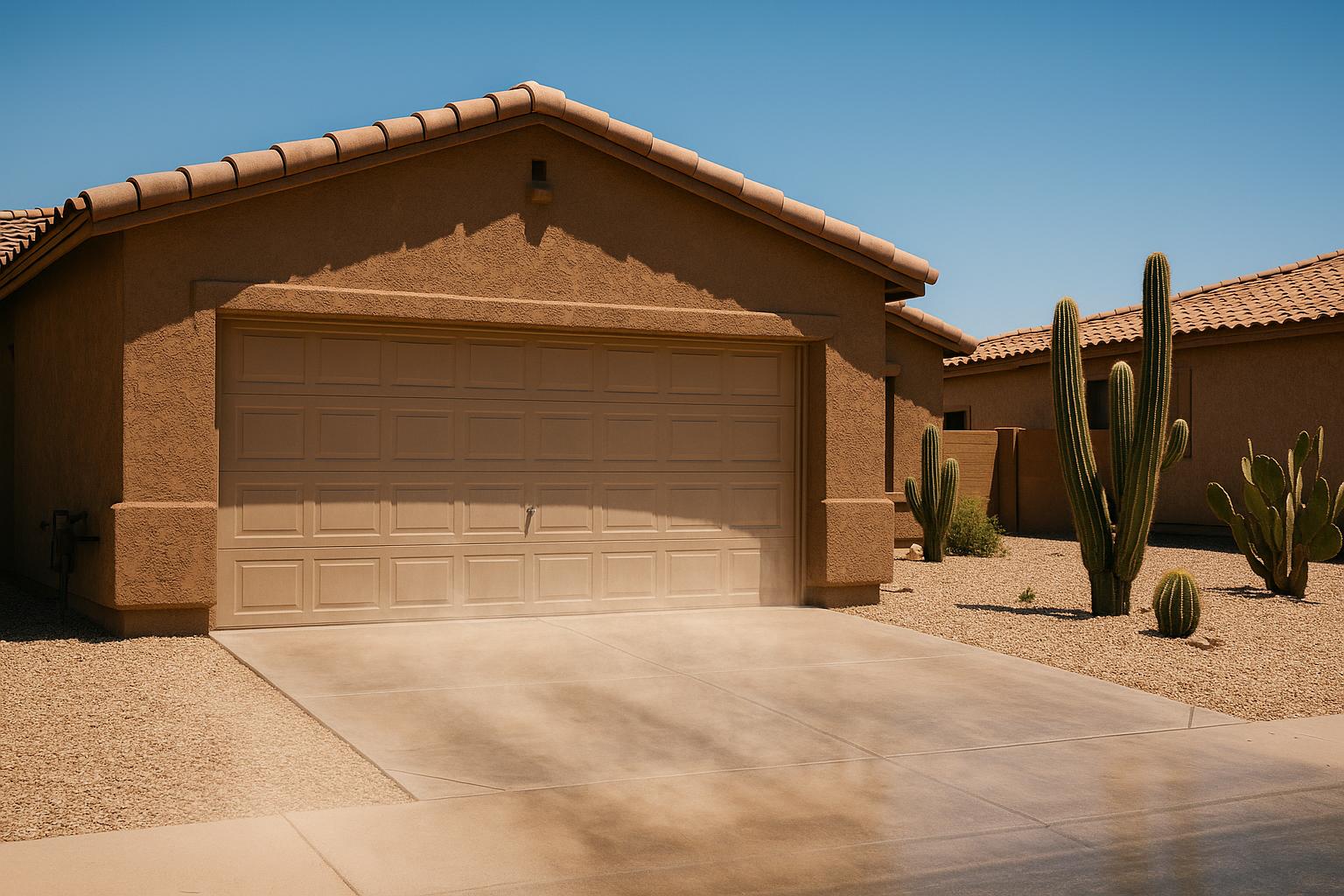
When Triple-Digit Temperatures Attack Your Garage Door
Living in Waddell means dealing with summer temperatures that regularly push past 110°F. While most homeowners prepare for the heat by servicing their AC and staying hydrated, few think about how those extreme temperatures affect their garage door — until it stops working.
If you've ever pressed your garage door opener on a scorching afternoon and gotten nothing but a hum, a click, or complete silence, you're not alone. Heat-related garage door problems are one of the most common service calls we get during the Arizona summer. Here's what's going on and how you can prevent it from ruining your day.
Why Heat Causes Garage Door Problems
Your garage door system is made up of metal components, electronic circuits, and moving parts — all of which react to extreme heat in different ways. Understanding the root causes can help you troubleshoot the issue and know when it's time to call a professional.
1. Metal Expansion and Binding
Metal expands when it gets hot. Your garage door tracks, rollers, and hinges are all made of metal, and when temperatures soar, these components can expand just enough to cause friction and binding. The door may feel sluggish, get stuck partway up, or refuse to move at all.
This is especially common with older garage doors in Waddell where the tracks may already be slightly misaligned. Add thermal expansion to the mix, and you've got a door that simply won't cooperate.
2. Opener Motor Overheating
Your garage door opener has a motor, and like any motor, it generates heat during operation. When the ambient temperature in your garage is already well over 100°F, that motor doesn't have much room to cool down. Many modern openers have a built-in thermal protection switch that automatically shuts the motor off when it overheats.
If your opener works fine in the morning but stops responding in the afternoon, motor overheating is likely the culprit. You might notice it works again after the sun goes down and the garage cools off slightly.
3. Sensor Misalignment from Expansion
The safety sensors at the bottom of your garage door opening are sensitive devices. When the metal brackets holding them expand in the heat, the sensors can shift out of alignment. Even a fraction of an inch can break the infrared beam between them, and your door will refuse to close — or it may reverse immediately after starting to close.
4. Dried-Out Lubricant
The lubricant on your springs, rollers, and hinges can dry out much faster in Arizona's arid heat compared to more temperate climates. When lubrication breaks down, metal-on-metal friction increases dramatically. This puts extra strain on your opener motor, accelerates wear on moving parts, and can make the door too heavy for the system to lift properly.
5. Warped or Swollen Weather Seals
The rubber weather seal along the bottom of your garage door and around the frame can warp, melt, or become tacky in extreme heat. When this happens, the seal can actually stick to the garage floor or create enough resistance to prevent the door from opening smoothly.
How to Prevent Heat-Related Garage Door Failures
The good news is that most heat-related garage door problems are preventable with a little proactive maintenance. Here are the steps Waddell homeowners should take before summer hits full force.
Schedule a Pre-Summer Tune-Up
A professional maintenance visit in late spring can catch small issues before the heat turns them into big problems. During a tune-up, a technician will lubricate all moving parts with heat-resistant lubricant, check track alignment, test the opener motor, and verify sensor alignment. Think of it as a seasonal checkup for one of the largest moving parts of your home.
Keep Your Garage Ventilated
A garage with no ventilation can easily reach 130°F or higher during an Arizona summer. If possible, improve airflow with a ventilation fan, keep windows cracked when safe to do so, or consider insulating your garage door. Reducing the ambient temperature inside your garage takes significant stress off your opener motor and electronic components.
Insulate Your Garage Door
An insulated garage door does more than keep heat out — it also helps regulate the temperature of the door itself, reducing metal expansion and protecting the internal mechanisms. If your current door is uninsulated, upgrading to an insulated model is a smart long-term investment for any Waddell home.
Lubricate Moving Parts Regularly
Don't wait for your annual tune-up to apply lubricant. During the hottest months, consider applying a silicone-based garage door lubricant to your springs, rollers, hinges, and tracks every four to six weeks. Avoid using WD-40, which is a solvent and not a true lubricant — it can actually attract dust and make things worse.
Test Your Safety Sensors
Once a month, do a quick visual check of your safety sensors. Make sure they're aligned, the indicator lights are steady, and nothing is blocking the beam. Clean the sensor lenses with a soft cloth, as dust and debris from Arizona's desert environment can accumulate quickly.
Replace Worn Weather Seals
If your bottom weather seal is cracked, brittle, or sticky, replace it before summer. High-quality weather seals designed for extreme heat are available and can prevent your door from sticking to the garage floor on the hottest days.
When to Call a Professional
Some heat-related issues are easy to handle on your own, but others require a trained technician. Call a professional if:
- Your garage door is visibly off-track or the tracks appear bent
- The opener motor runs but the door doesn't move
- You hear grinding, popping, or snapping sounds during operation
- The door feels significantly heavier than usual when operated manually
- Springs appear stretched, rusted, or damaged
- Your door won't stay open and slides back down on its own
Attempting to fix track, spring, or motor issues without the right tools and experience can be dangerous and may cause further damage to your system.
Don't Let the Arizona Heat Win
Your garage door works hard every day, and in a place like Waddell, the summer heat makes it work even harder. A little preventive care goes a long way toward avoiding the frustration of a garage door that quits on the hottest day of the year.
If your garage door is already struggling in the heat — or if you want to get ahead of problems before they start — Waddell Garage & Gate is here to help. We know the unique challenges that West Valley homeowners face, and we'll make sure your garage door is ready to handle whatever summer throws at it.